
The instinct to stay on an Employer of Record rests on the belief that leaving is the moment you inherit the legal risk. You inherited it the day you signed.
Deel’s own EOR terms make the customer responsible for the worker’s day-to-day management, insurance, and termination, because you are the one directing the work. The $599 to $699 you pay per head each month buys the feeling of protection, then quietly hands the indemnity back the instant anything breaks.
Your permanent establishment exposure grows the entire time, on a schedule the OECD admits has no precise frequency test. Every invoice you pay on time buys you deeper into a liability no one can measure.
Key Takeaways
- Deel’s standard Employer of Record terms assign day-to-day management, insurance, and termination liabilities back to the customer, disproving the assumption that the provider absorbs permanent legal risk.
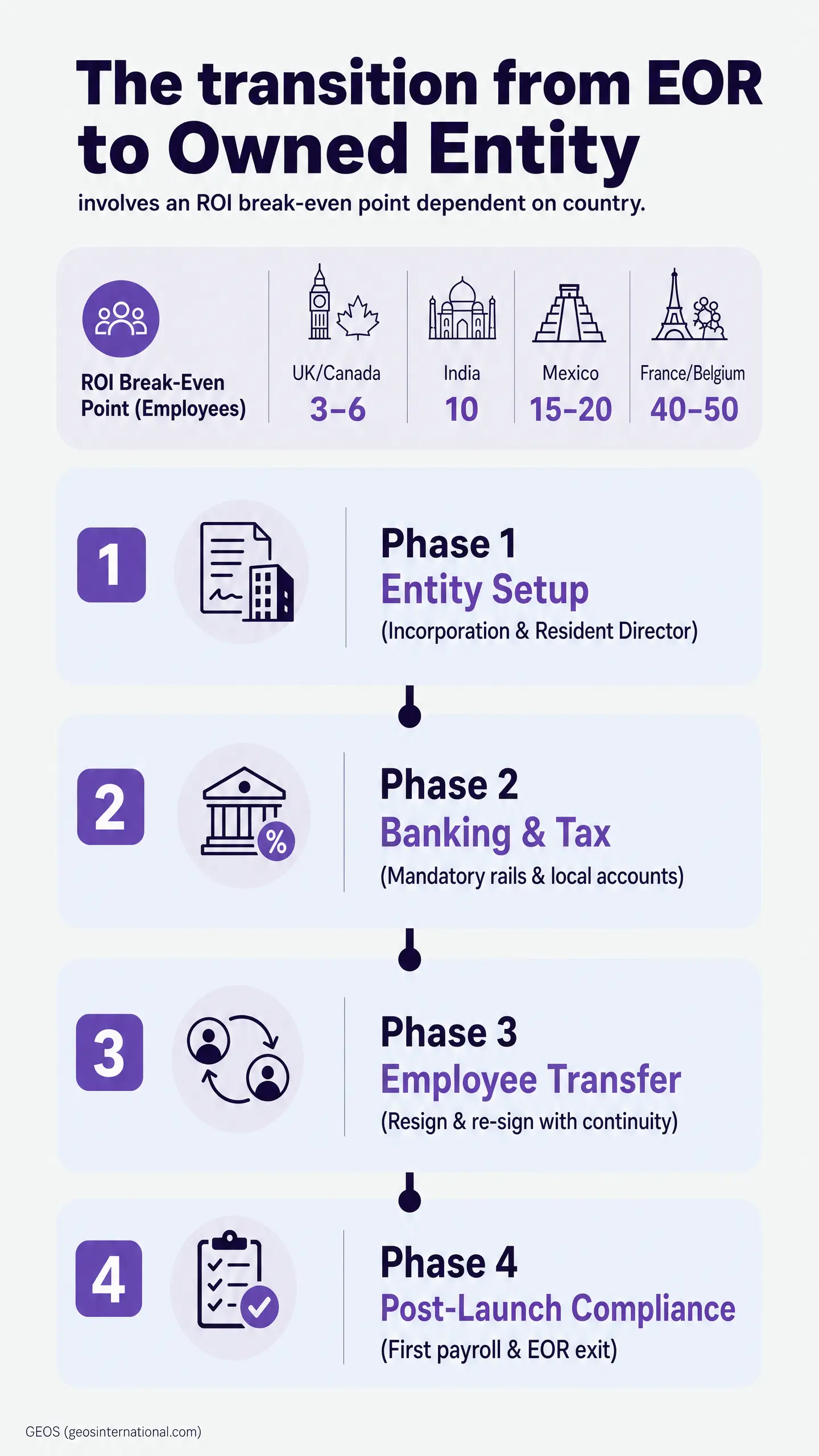
- Transitioning to an owned corporate entity becomes cost-effective at three to six employees in the United Kingdom, roughly 10 in India, and up to fifty in France.
- Germany’s AUG labor law caps Employer of Record worker assignments at 18 consecutive months, legally forcing companies to transition long-term staff to an owned local entity.
- Although United Kingdom Companies House registers new business entities within 24 hours, mandatory HMRC PAYE registrations extend the true timeline for an operational payroll entity to three or four weeks.
- Mexican social security compliance requires IMSS payments through the SIPARE system using authorized traditional banks like BBVA and Santander, preventing companies from running compliant payroll through remote fintech accounts.
- Incorporating a global entity in India legally mandates the appointment of a resident director who has physically stayed in the country for a minimum of 182 days.
When Does an Owned Entity Become More Cost-Effective Than an Employer of Record?
EOR fees have crept up. Deel’s public list price now sits at $599 per employee per month, and Remote’s standard management fee runs $699. At 10 employees in one country, you’re paying roughly $72,000 to $84,000 a year in management fees before anyone counts benefits markups or the deposits the EOR is holding.
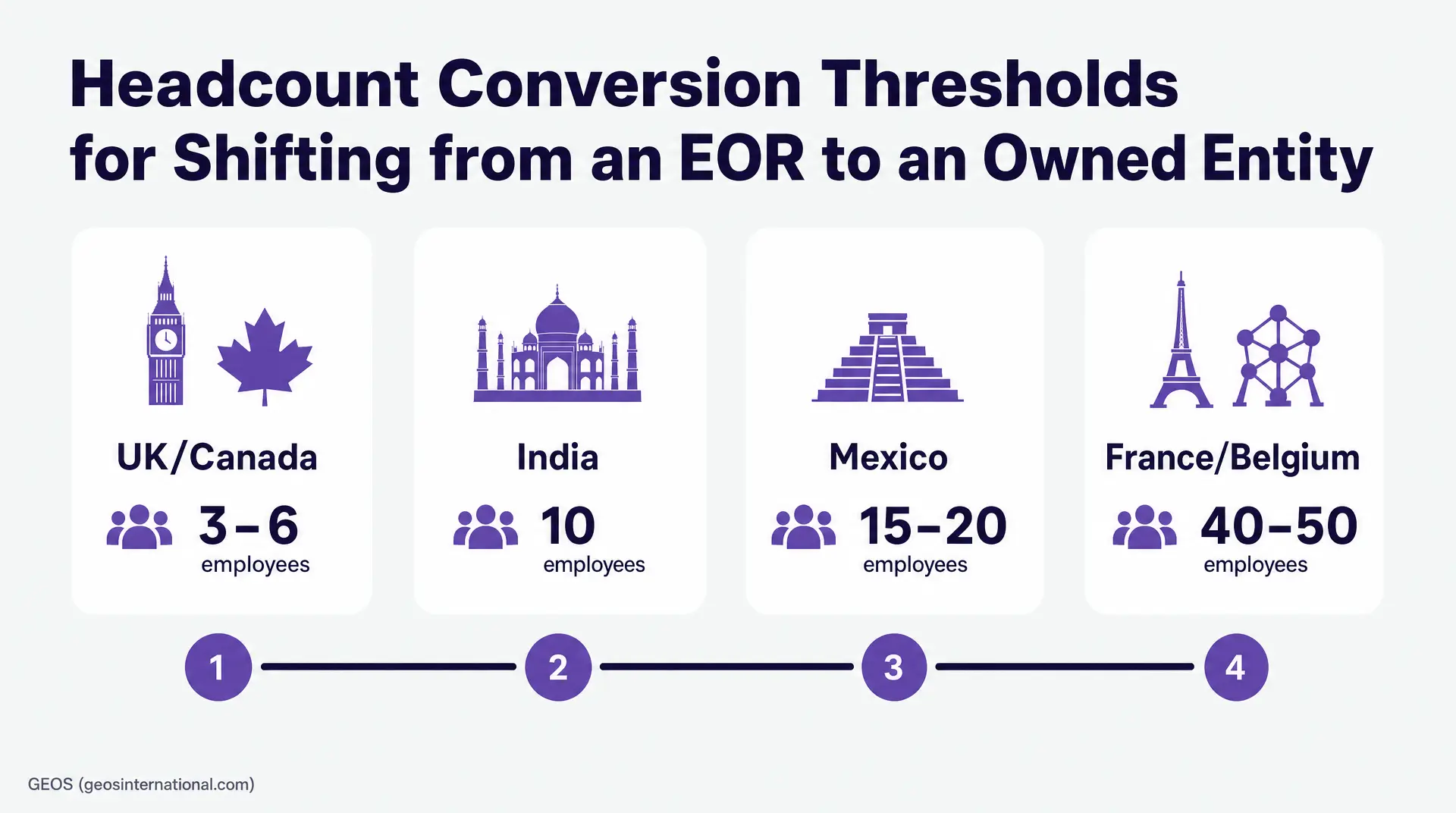
Whether an owned entity beats that number depends entirely on the country. In the UK or Canada, the flip happens around three to six employees, because setup and ongoing compliance are genuinely cheap there. India tends to flip around 10, usually for companies scaling toward a global command center. Mexico sits closer to 15 to 20, since ongoing tax and employment compliance is heavy. France and Belgium run closer to 40 or 50.
Those spreads track real cost structures. The OECD’s latest tax wedge data puts the employment burden on an average single worker at 52.5% in Belgium, 47.2% in France, 32.4% in the UK, and 21.7% in Mexico. Payroll economics vary that dramatically between jurisdictions, which is why any universal headcount rule for conversion is wrong the moment it leaves someone’s mouth.
What Non-Headcount Triggers Force Companies to Transition From EOR to an Owned Entity?

Headcount is one input in a bigger calculation. If you need to sign a commercial lease, recognize local revenue, execute a tax strategy, or contract directly with enterprise and government clients, no EOR can do that for you. The same goes for compliantly granting equity to local employees or building bespoke benefits packages. I weigh all of these into every break-even calculation, because they change the ROI well before the raw employee-count math does.
Regulators are also forcing the timeline. Germany’s AUG law caps the same worker’s assignment at 18 consecutive months, and prior assignments count in full unless there’s a break of more than three months. Companies that treated German EOR as a permanent arrangement are discovering it was legally designed to be temporary.
Who Holds the Legal and Permanent Establishment Liability in an Employer of Record Contract?

The objection I hear most often: “if we leave the EOR, we take on all the risk.” Read your contract. Deel’s own EOR terms assign the customer responsibility for the worker’s day-to-day management, a safe work environment, relevant business insurance, and termination costs. What you’re buying is liability protection in concept, with the indemnity passed back to you when things go wrong – because you’re the one actually directing the employee’s work.
It also does nothing for permanent establishment exposure. People ask me for a safe headcount threshold, and the honest answer is that the OECD’s own commentary says there is no precise frequency test. The risk depends on what your people are doing in-country, and it builds quietly while the EOR invoices keep arriving.
Why Does a Gap Exist Between Incorporating and Making a Global Entity Fully Operational?
The first platform dedicated to streamlining entity setup and management.
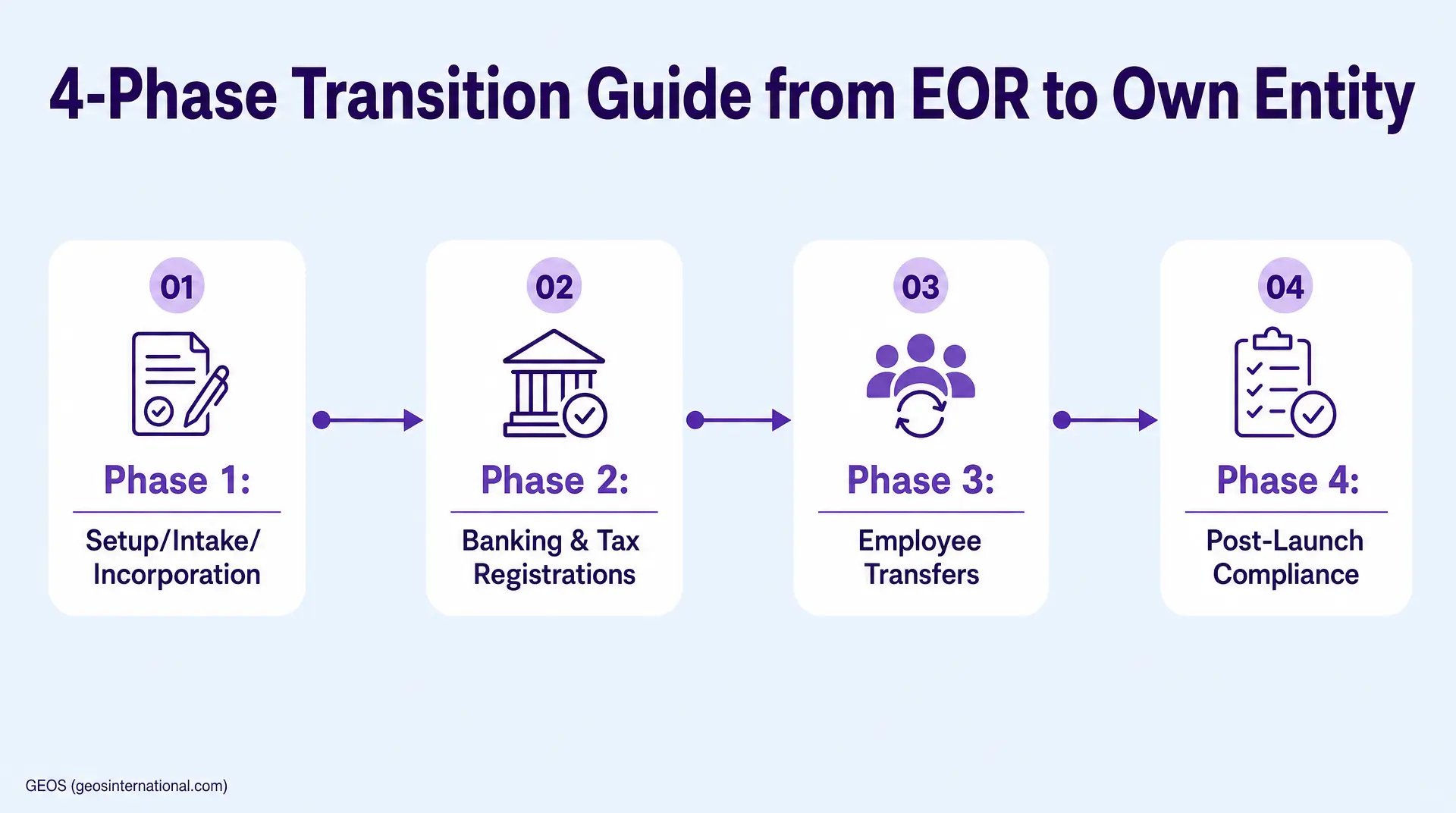
Setting up an entity has three distinct stages. First comes intake: collecting parent company and director documents, then notarizing and apostilling them per country guidelines. Second is the actual incorporation – public notary appointments, lodging the application locally. Third are the registrations that make the entity real: payroll, social security, tax. The hardest part is the variance. Doing this in Mexico is very different than Singapore, which is very different than India, and assuming your last country’s playbook transfers to the next one is how launch dates die.
The UK proves the gap exists even in the world’s fastest jurisdiction. Companies House registers an online company for £100, usually within 24 hours. But HMRC requires PAYE registration before your first payday and won’t let you register more than two months before you start paying people. Even in a 24-hour country, legal existence and payroll readiness run on separate clocks. The UK is the rare market where three to four weeks to fully operational is an honest quote. Most timelines quoted elsewhere describe only the government processing window and leave out everything on either side of it – which is how operators get hooked into a false promise.
What Are the Core Steps and Timelines for Phase 1 of Global Entity Setup?
Plan on four to twelve months depending on the country, and expect the delays to come from your own side rather than the government’s. The documents that stall applications are personal ones. A CEO listed as sole director needs to produce a notarized proof of address in the form of an electric bill. A UBO who owns a slice of the parent but isn’t attached to the business goes quiet when the KYB process asks for their ID. I’ve watched applications expire over exactly this, because many authorities enforce 60-day validity windows on submitted documents. One slow signature and previously approved paperwork lapses, forcing the entire collection process to restart.
The variance compounds when a company stands up several entities at once. One jurisdiction wants something wet-signed versus digitally signed. Another demands a specific letterhead. A third schedules a live KYC video call with 48 hours’ notice. None of these are individually difficult, but landing on a busy executive’s desk without warning, they’re how a launch quietly slips a quarter. We pre-map every one of these actions on our platform for precisely this reason – the executive shouldn’t be discovering them piecemeal by email.
Why Is Appointing a Resident Director Critical During Phase 1 of Global Entity Setup?

Several major markets won’t let you incorporate without a local director. Singapore’s Companies Act requires at least one director ordinarily resident in Singapore. India requires one who has stayed in the country 182 days, and Australia, New Zealand, Mexico, and the UAE all have their own versions. Most scale-ups don’t have an executive or lawyer sitting in-market to fill this role, and the requirement is non-negotiable.
Whatever you do, don’t solve it with an employee. We had a client who appointed a local team member as resident director just to check the box. When that person later left the company and wanted to shed the personal liability, removing them became a genuinely sticky legal situation – one we resolved by replacing them with a vetted GEOS director who is contractually barred from any decision-making power over the business. A professional third party costs an annual fee. The unwind costs far more, in both money and time.
What Are the Mandatory Banking and Tax Requirements for Phase 2 Global Employment Setup?
The entity exists. Now you build what actually employs people: tax registrations, pension or provident fund accounts, insurance and benefits, local-law employment contracts, and the item that runs longest in every timeline I’ve managed – the bank account.
We had a US-based client set up in India to run payroll for a group of new workers there. The first bank application went in and the bank just went dark. That stalled the incorporation itself, because the share capital deposit was required to complete it. The client had committed start dates, so they ran a patchwork payroll solution in the meantime, and the provident fund and pension payments weren’t made properly. Those compliance issues followed the entity long after it went live. Running payroll in India legally requires a traditional account on Indian rails so TDS remittances and provident fund payments are recognized by local officials. A workaround doesn’t shorten that path. It moves the problem downstream and makes it more expensive.
Mexico runs the same play with different actors. Fintech accounts open remotely and look like a shortcut, until you learn that IMSS rules make social security contributions due by the 17th of the following month, payable through SIPARE only via named authorized banks like BBVA, Banorte, and Santander. A fintech account without those rails cannot make the mandatory payments, no matter how quickly it opened. Meanwhile the registration agency moves faster than its reputation suggests – SAT reports that 66 of every 100 company tax ID processes concluded the same day when requirements were met. The delays live in your document readiness and your banking choice. Add that Mexican salary is calculated more like a day rate, with the Federal Labor Law permitting pay by unit of time, piecework, or commission, and you can see why copying US payroll logic fails here.
My rule for this phase is firm: do not commit a first payroll date to anyone until the rails for that country’s mandatory payments are proven end to end.
How Should Companies Execute Phase 3 Employee Transfers From an EOR to Owned Entity?

This phase is less about paperwork and more about people. You are, in the end, asking every employee to resign from their EOR contract and sign a new one with your entity, with continuity maintained in between. That takes a level of communication and coordination the EOR will not provide.
The mechanics with the EOR itself are manageable: notice within their payroll lead times, social insurance un-enrollment, deposit reconciliation, and work permit transfers where they apply. What the EOR cannot do is help your employees navigate the change. They won’t decide how you honor seniority, vacation accruals, or existing benefits. They won’t draft your new employment contracts. Those calls belong to you, and they determine whether your team experiences this transition as an upgrade or a reason to update their resume.
Sequence accordingly. Build the employee communication plan before you give the EOR notice, and make sure the new package matches or beats what people hold today. If employees are blindsided mid-transfer, that’s a failure of leadership and communication, and it surfaces as attrition at the worst possible moment.
What Post-Launch HR and Compliance Obligations Define Phase 4 of a New Global Entity?
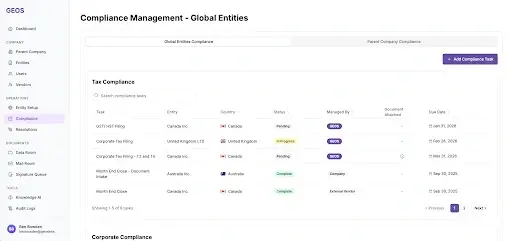
First payroll out of your own entity is the milestone everything sequences backward from. It’s also where ownership permanently changes hands. Keeping the lights on from a compliance perspective – annual filings, corporate secretarial work, tax deadlines – is now yours, and the tasks vary drastically by country and by what your business actually does there.
The obligations get oddly specific. Peru requires two shareholders. We rescued a client’s entity there after a departed shareholder left it with only one, drafting the documentation to appoint a replacement and restore good standing with local officials. The UK recently introduced a director verification process for UBOs that can cost an entity its standing if missed. None of this appears in a launch plan unless someone maps it deliberately, with named owners and hard deadlines, before month one closes.
One closing rule for this phase: don’t leave stragglers on the EOR. Running an EOR arrangement in a country where you now operate a tax-paying entity is a much worse posture than using the EOR alone, and local officials read the bifurcated setup as exactly what it looks like. Complete the transfer.
How Should Companies Sequence an Employer of Record Transition Against a Hard Deadline?
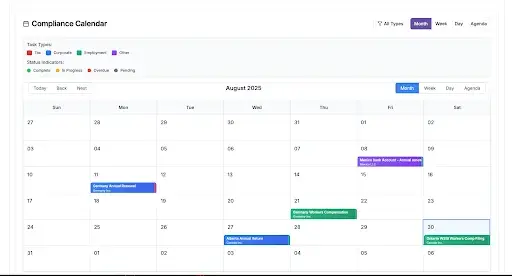
Operators rarely choose timing in a vacuum. There’s a client contract start date or a hiring wave anchoring everything, so my sequencing advice stays consistent. Start Phase 1 earlier than feels necessary, because document collection and banking are the stages you control least. Run Phase 2 preparation in parallel where the country allows – benefits benchmarking and contract drafting don’t need to wait for a certificate. Hold your Phase 3 notice until banking is proven, because giving notice before you can run payroll is exactly how companies end up in patchwork solutions.
For European planning in 2026, one caution: don’t wait for EU-Inc. The European Commission presented the proposal in March 2026 and is asking Parliament and Council to agree by year-end. Until legislation is agreed and implemented, national entity paths remain the only paths, and country-specific VAT, payroll, and social registrations will survive any unified framework anyway. Pausing expansion to wait for it converts directly into lost market share.
Finally, don’t treat your EOR as an adversary through any of this. We partner with many of the largest EOR firms because this transition is a natural graduation for their clients, and the biggest EORs have all built global payroll products – a quiet acknowledgment that the arrangement was never the permanent solution for a scaled team. Once you’ve reached critical mass in a country, the math is knowable, the sequence is mappable, and the surprises are avoidable. Running the conversion in four deliberate phases is how you keep it that way.
Frequently Asked Questions
Who assumes the financial liability for employee termination costs under an Employer of Record?
You do. Despite the illusion of outsourced risk, Deel’s legal terms explicitly assign the customer full responsibility for severance and termination costs. When transitioning from EOR to own entity, your severance exposure doesn’t suddenly begin – you already held it.
Can our business sign local enterprise contracts and commercial leases through an EOR?
No. An Employer of Record strictly facilitates employment. It cannot legally execute commercial agreements, sign office leases, or recognize local revenue on your behalf. If your expansion requires direct B2B contracting, transitioning to an owned entity is a non-negotiable operational prerequisite.
Is there a legal time limit for keeping German employees on an EOR before establishing an entity?
Yes. Under the German Temporary Agency Work Act, a worker cannot be assigned to your business for more than 18 consecutive months. If your market presence is permanent, relying on an EOR creates an immediate compliance clock that forces an entity transition.
Can we expedite the entity transition process by using a global fintech account for local payroll?
Rarely. Fintech accounts often fail to connect with mandatory government payment rails. In Mexico, for instance, IMSS social security contributions must be paid via SIPARE through authorized traditional banks. Fast fintech setups usually create expensive downstream compliance failures.
Should we delay European entity transitions until the unified EU-Inc framework is implemented?
Absolutely not. The EU Inc. proposal won’t reach a potential agreement until late 2026. Furthermore, country-specific VAT, payroll, and social security registrations will still survive this legislation. Pausing your global expansion to wait for it simply guarantees lost market share.