
Forming the company is the part that was never hard. The state stamps your Certificate of Formation before lunch and hands you a business that cannot hold a dollar, pay a person, or sign a contract.
The number that turns that certificate into a company anyone can transact with, the EIN, still travels by fax machine in 2026, on an IRS queue that lists 12 business days can still take weeks.
Anyone selling you a US entity in 24 hours is quoting the one milestone that changes nothing.
Key Takeaways
- While a Delaware LLC certificate of formation processes in hours, foreign founders face weeks of delays obtaining an Employer Identification Number because the IRS requires faxing Form SS-4.
- Under FinCEN’s August 2026 rule, US-formed LLCs with foreign owners are exempt from government BOI reporting, shifting ultimate beneficial owner verification entirely to bank compliance teams.
- Foreign-owned Delaware LLCs should file Form 8832 to elect corporate tax treatment within 75 days of formation to satisfy the due diligence requirements of US enterprise procurement teams.
- Maintaining a foreign-owned Delaware LLC as a disregarded entity requires filing Form 5472 with a pro forma 1120 for internal transactions, carrying a $25,000 IRS penalty for missed filings.
- Foreign founders applying for a US Employer Identification Number should bypass the slow Individual Taxpayer Identification Number process by entering foreign or N/A on line 7b of the IRS SS-4 form.
- Foreign founders should skip traditional US banks requiring in-person visits and use FinTech platforms like Mercury and Airwallex that support remote Know Your Business verification for international owners.
- Automated registered agent operating agreements often fail bank compliance checks because they lack the specific legal language required to trace signing authority back to a foreign parent company.
Which Steps of Delaware LLC Formation Process Quickly for Non-US Residents?
The first platform dedicated to streamlining entity setup and management.
Delaware earns its reputation at the formation step. The Certificate of Formation needs the LLC’s name plus a Delaware registered office and agent, and the Division of Corporations offers 1-hour, 2-hour, same-day, and next-day processing, though filing volume can stretch those windows. On a normal day you have a real Delaware entity before lunch. Delaware’s own FAQ is equally clear that none of that speed covers your EIN or your bank.
The ultimate beneficial owner side is lighter still. As of August 14, 2026, a US-formed LLC is exempt from BOI reporting under FinCEN’s final rule. The silent investor who refuses to hand over a passport and stalls your Spanish setup has no government filing to block here. That investor is not off the hook, though. Banks operate under FinCEN’s Customer Due Diligence rule, which requires them to verify every individual who owns 25% or more of the entity, plus one person who controls it, traced through your parent to the natural persons behind it. The UBO conversation has moved from the government to the bank. A 15% silent investor is irrelevant. A 30% one needs identification ready before you apply for an account.
Ongoing state maintenance is light too. A Delaware LLC owes a $300 annual tax due June 1, and unlike a Delaware corporation it files no annual report. Add the registered agent renewal and that is the entire state-level job of keeping the lights on from a compliance perspective.
Which Federal Tax Elections Should Foreign-Owned Delaware LLCs Make Before Filing?
An LLC is a pass-through entity from a tax perspective. By default, a single-member LLC is disregarded for federal tax purposes and a multi-member LLC is treated as a partnership. A wholly owned subsidiary is single-member, so the IRS sees straight through it to a foreign owner.
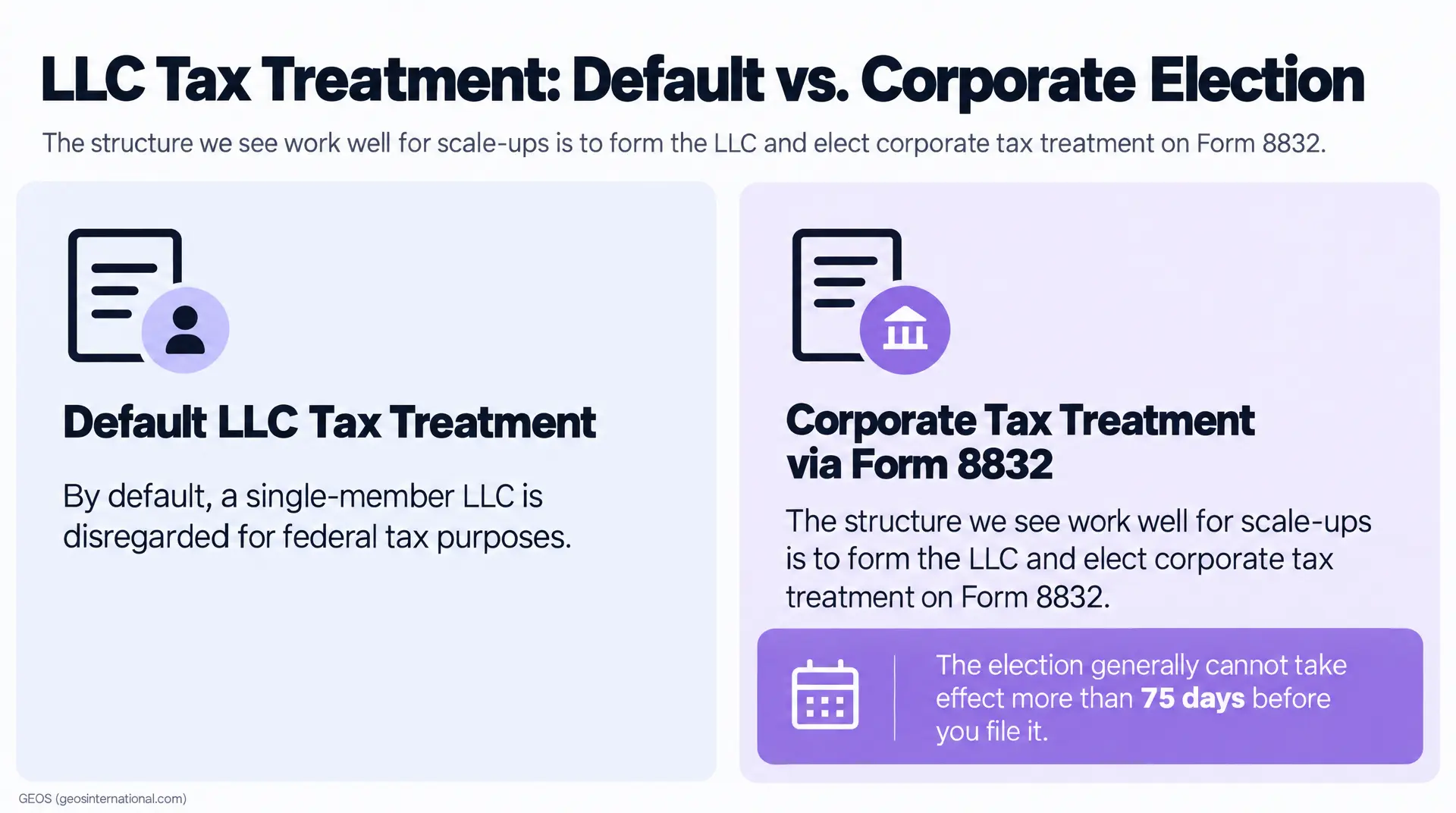
The structure we see work well for scale-ups is to form the LLC and elect corporate tax treatment on Form 8832. The LLC layer keeps administration minimal, and US investors and enterprise procurement teams expect a corporate tax profile when they diligence a counterparty. Timing matters, because the election generally cannot take effect more than 75 days before you file it, or 12 months after. Make the call during formation, not after your first US customer signs.
The election buys structure and cleaner administration. Your tax bill is a different matter. Federal C-corporation income is taxed at 21%, Delaware adds 8.7% on income apportioned to the state if you actually do business there, and profits can be taxed again as dividends. Delaware’s pull is its business law and predictability.
Skip the S-corporation idea entirely. An S-corporation cannot have a nonresident alien shareholder, and a corporation cannot be an S-corp shareholder at all, so a foreign parent fails both tests. Leaving the LLC disregarded does not make it invisible either. A foreign-owned disregarded entity with reportable transactions between it and its parent files Form 5472 with a pro forma 1120, and the IRS lists the penalty for missing it at $25,000. Capitalizing your own subsidiary is exactly the kind of transaction it captures, and no $150 registered agent will mention it.
Why Does Obtaining an Employer Identification Number (EIN) Delay Foreign-Owned LLCs?

The Employer Identification Number is what lets the entity functionally do business. Banking, partnerships, and transacting in the US all run through it. A US citizen with a Social Security Number and a domestic business gets one online in under an hour. The missing number is only part of why you cannot. The IRS instructions restrict the online application to applicants with a US residence, principal place of business, or principal office. A Delaware LLC whose only US address is a registered agent, with a responsible party sitting in Toronto or Berlin, fails that test regardless of who holds what number. That leaves phone, fax, or mail.
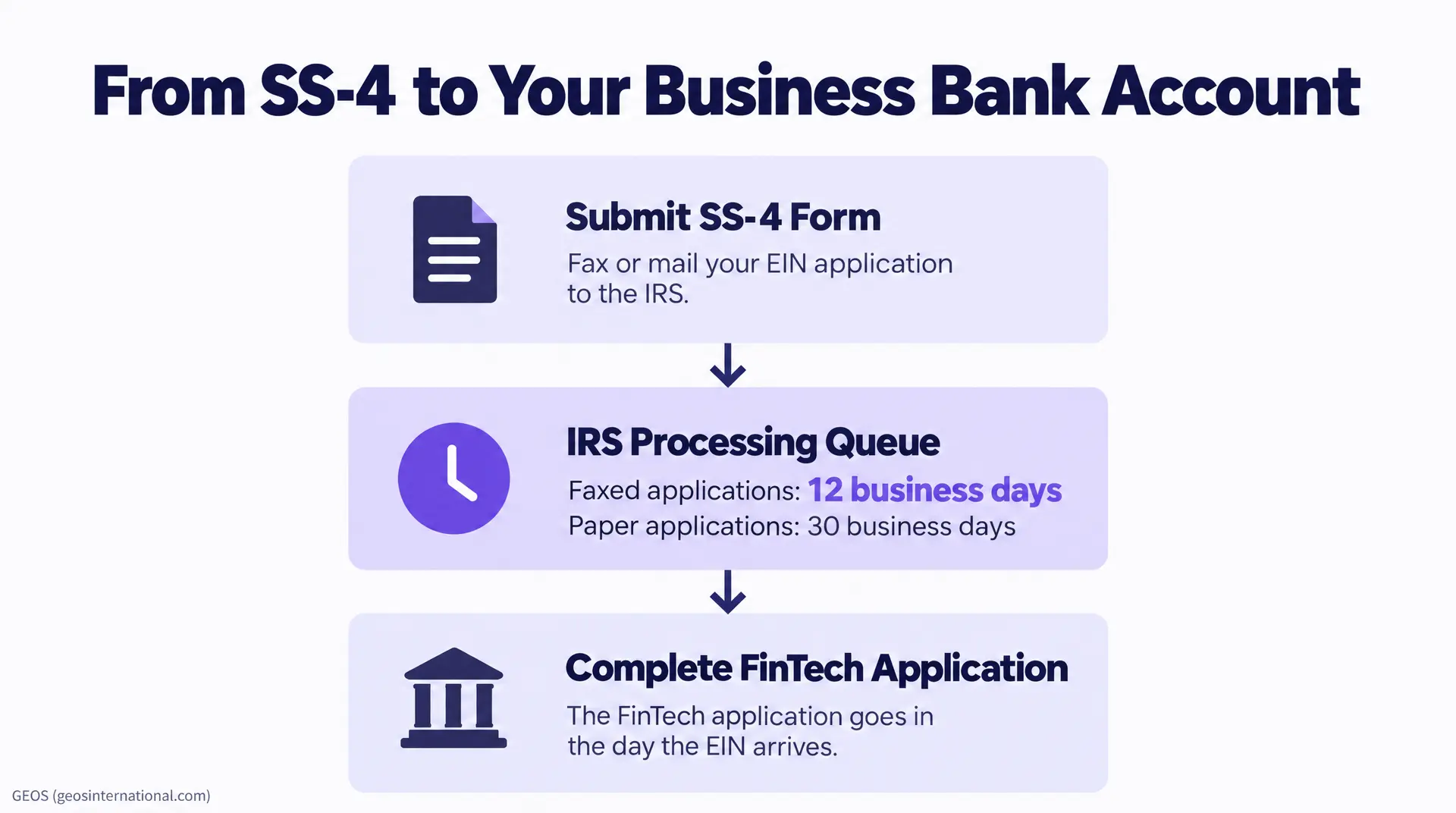
As of late September 2026, the IRS processing-status page lists faxed SS-4 forms at 12 business days and paper applications at 30 days. In practice, foreign applications get misrouted or sit in a queue that never moves. We normally have to fax the SS-4 to a specific department and then call that department to have it actually processed. That is the gap between the published 12 days and the weeks or months it takes.
Why Should Foreign Founders Skip the ITIN Process When Applying for an EIN?
A common workaround is to have a director apply for an Individual Taxpayer Identification Number first. Do not do this. The ITIN process is slow on its own, and the form does not require it. The SS-4 instructions allow line 7b to read “foreign” or “N/A” when the responsible party has no SSN or ITIN and is not eligible for one. You would be stacking one slow queue on top of another.
How Can Foreign-Owned LLCs Expedite IRS Fax Processing for EIN Applications?
During a recent US government shutdown, processing slowed across the IRS and EINs for companies entering the US sat for weeks. The only way we pushed them through was repeatedly faxing the SS-4 to the right department and calling until someone picked it up. There was no clever hack. Knowing the right fax number and phone line, and using both again the following week, was the entire method. Yes, fax. In 2026.
Why Should Foreign-Owned US LLCs Choose FinTech Over Traditional Business Banking?

Once the EIN lands, the next trap is the bank. We had a client who tried to open with Bank of America or Wells Fargo purely on brand awareness. The bank required in-person travel. It required KYB and KYC processing that seemed to be delayed and ever-changing. The client switched to a FinTech option, had far more success, and ended up with almost the full functionality of the US.
Mercury and Airwallex support remote KYC and KYB, so a founder in Amsterdam opens a US account without a flight. They still run the same Customer Due Diligence checks, which is why the 25% owner list and control person should be assembled before the EIN arrives.
The US is unusual in this. In Mexico, only six traditional banks have the rails for mandatory social security payments, and a FinTech account fails at that job. Only the UK, where Revolut can often run an entity end to end, gets the same day-one FinTech recommendation from me.
Why Do Foreign-Owned Delaware LLCs Need Customized Operating Agreements for Bank Compliance?
Every Delaware LLC needs a registered agent in the state, and dozens of automated services will provide one for around $150. These services are designed for US citizens forming a domestic entity, and that assumption creates two problems for a foreign owner. The first is the EIN. They obtain one easily for a US person through the online route and are not built for the international fax-and-call routine, so the founder does that work anyway after losing a few weeks assuming it was handled.
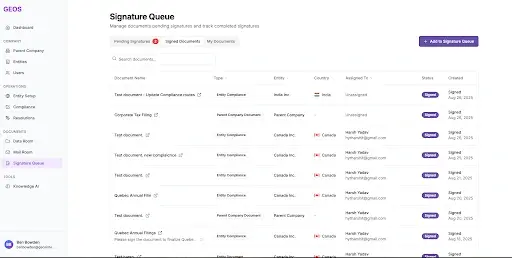
The second is the operating agreement, which governs the actual subsidiary. Bundled templates are written for a citizen-owned straightforward entity. A subsidiary whose sole member is a foreign company, whose managers sit abroad, and whose signing authority has to trace back to the parent needs different language. Incomplete agreements do not fail on day one. They fail when a bank’s compliance team reads the document during KYB and cannot reconcile who controls the entity, or when an enterprise customer’s counsel asks for it.
I will side with the founder who says a US lawyer is unnecessary here. Hiring one for a straightforward LLC is expensive overkill that overcomplicates the process, unless you genuinely need multiple members with different economic rights. The typical wholly owned subsidiary needs a template built for foreign ownership, which is why we built one for GEOS clients.
What Are the Compliance Complexities of Hiring US Employees for Foreign-Owned LLCs?
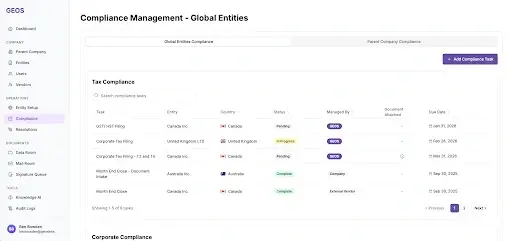
Everything above is the entity. The moment you hire a US employee, the complexity compounds, and it compounds by state. One hire in California, another in New York, and a third in Texas can mean three payroll tax registrations, three sets of employment rules, and potentially three foreign qualifications with three registered agents. The word potentially matters, because SBA guidance says expanding into another state might require foreign qualification, and each state sets its own rules and fees.
The other shock is benefits, and founders from universal healthcare systems consistently underestimate what competitive US coverage costs. We worked with a company moving more than 10 employees off a US Employer of Record onto their own entity. Their small headcount disqualified them from the large-group rates the EOR had pooled, so matching what employees already had became significantly more expensive. SHOP plans do cover businesses with 1 to 50 employees, and under 50 full-time equivalents you are generally not required to offer coverage. Neither fact helps your budget. The pooled pricing disappears and your team expects equivalent coverage the day they sign, so communicate the legal vehicle change well before anyone is asked to resign and re-sign. Surprised employees panic, and their panic becomes your delay.
When Should Foreign-Owned US LLCs Use an Employer of Record for Hiring?

The breaking point between an EOR and your own entity is exceptionally low if you hire in a handful of states. Past fifteen to thirty states, the math flips, and a Professional Employer Organization or EOR becomes highly beneficial purely to absorb the state-level administration. Keep the entity for contracting and revenue and rent the employment layer. One note for defense-adjacent companies: DFARS counts a US-incorporated subsidiary as a domestic concern even when the parent is foreign, which does not clear every ownership or security restriction but is where the conversation starts.
What Is the Realistic 2026 Setup Sequence for a Foreign-Owned Delaware LLC?
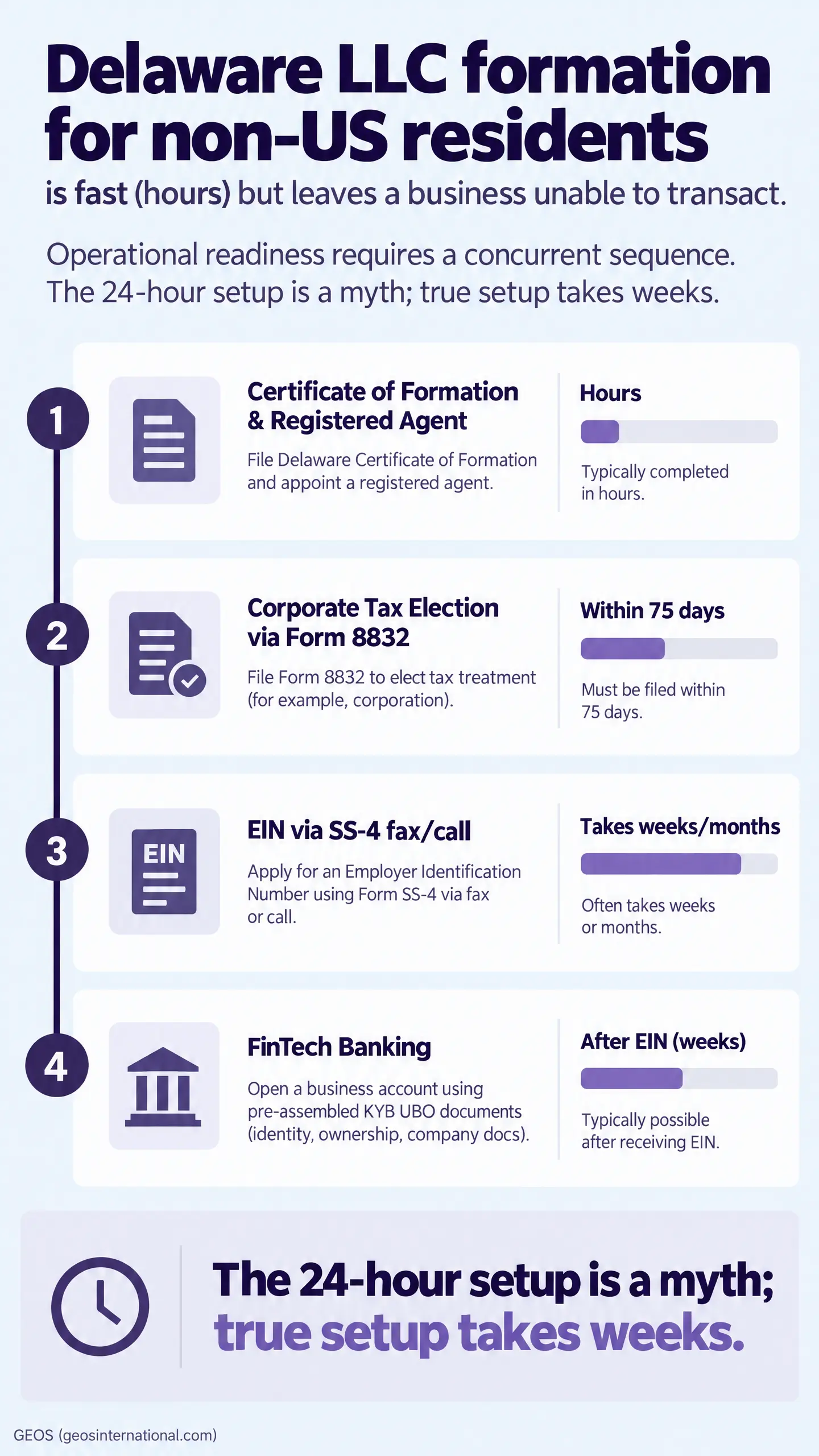
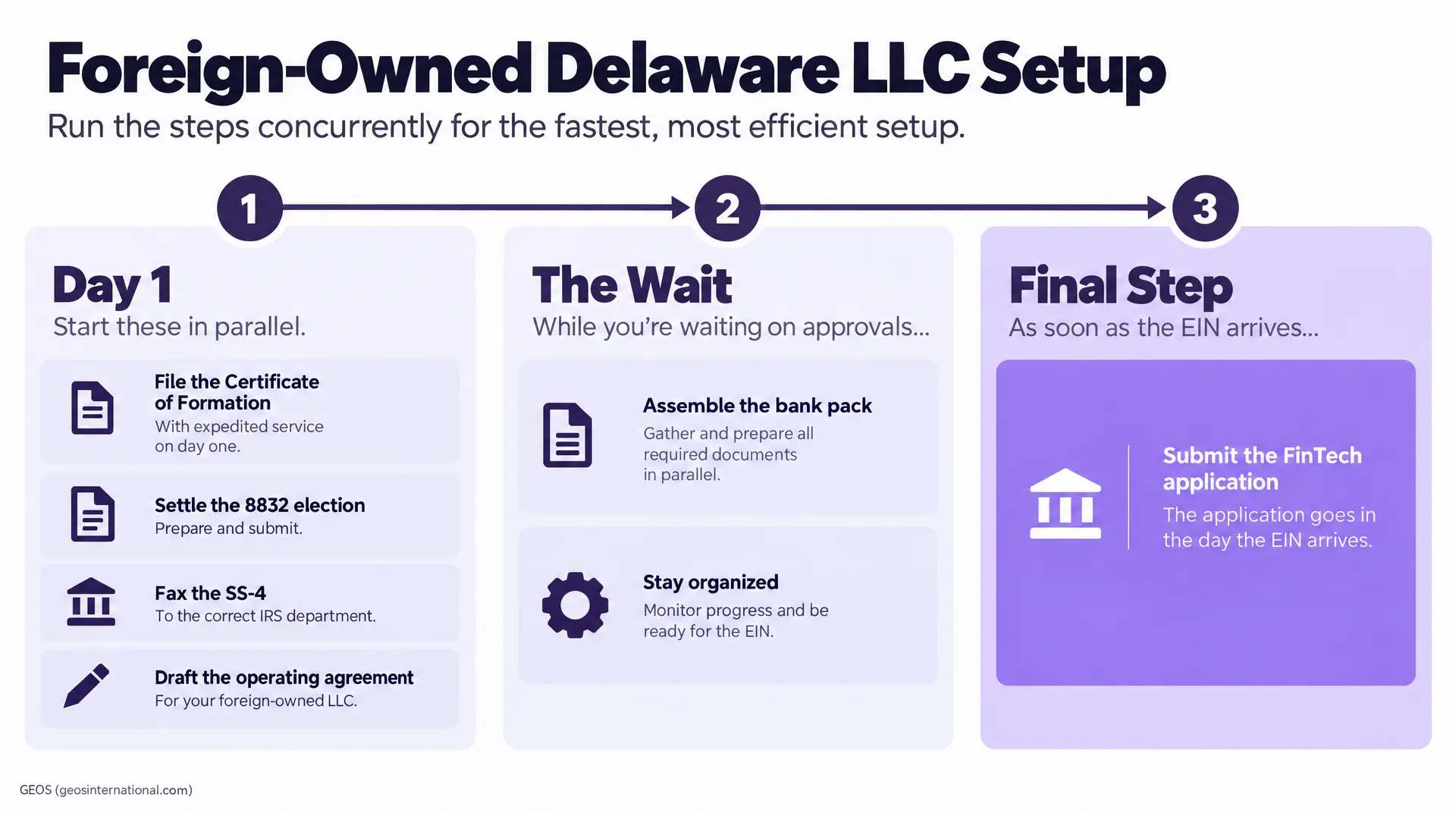
Run the steps concurrently rather than waiting to get hit with the next immediate step. On day one, file the Certificate of Formation with expedited service and appoint your registered agent. The same day, settle the 8832 election while the 75-day window is wide open, and fax the SS-4 to the correct IRS department. Draft the foreign-owned operating agreement during the wait. Assemble the bank pack in parallel: passports for every 25% owner traced through your parent, one control person, and the agreement. The FinTech application goes in the day the EIN arrives. That is how we map every country on the GEOS platform, so steps run in parallel instead of arriving piecemeal by email.
Realistically, the entity legally exists within hours. The EIN takes 12 business days on the IRS’s own clock and weeks to months in practice. Banking follows within days of the EIN if you go FinTech. Anyone quoting you 24 hours is describing the Certificate of Formation. The business that can transact arrives weeks later.
Before you start, answer the three questions I ask every founder: where you want to set up, why and for what specific reason, and what infrastructure and partners you have in place to support it. For the US, the honest answer to the third question is usually the difference between a two-month setup and a six-month headache.
The United States is one of the easiest jurisdictions in the world to enter. Treat it as easy, but not as instant. A B-plus plan executed this week beats a perfect plan waiting on a fax machine.
Frequently Asked Questions
Can our foreign-owned Delaware LLC bid on US defense contracts?
Yes. Under DFARS Part 225, a US-incorporated subsidiary counts as a ‘domestic concern’ even with a foreign parent. This unlocks defense bids immediately, though specific security restrictions may apply depending on the contract.
Do we need a new LLC for every US state we hire in?
No. You keep your single Delaware LLC. Expanding across state lines just means filing for ‘foreign qualification’ locally. SBA guidance confirms this triggers local rules and registered agent fees, but you don’t need a fragmented web of new entities.
Are we legally mandated to provide healthcare when transitioning our US team off an EOR?
Not immediately if headcount is small. HealthCare.gov states employers with 1 to 50 full-time-equivalent employees are generally exempt from the federal employer mandate. You can use SHOP plans, but expect premiums to spike without EOR pooling.
Does electing corporate tax status guarantee a lower US tax burden?
No. Federal C-corporation income faces a flat 21% tax. If you operate locally, add an 8.7% state tax, plus double taxation on dividends, per Delaware Corporate Income Tax FAQs. You elect corporate status for clean administration and enterprise procurement, not tax avoidance.
Do we need to appoint a US-resident director to form the Delaware subsidiary?
Absolutely not. Delaware doesn’t require resident directors, and lacking a US SSN won’t block you. The IRS Form SS-4 Instructions explicitly allow foreign responsible parties to enter ‘foreign’ or ‘N/A’ when applying for your EIN. Don’t let a local consultant tell you otherwise.