
Canada creates a specific kind of planning error. The market is relatively easy, so teams treat the structure decision as cosmetic. Federal sounds broader. Provincial sounds narrower. The filing looks fast, so the rest of the launch is assumed to be fast as well. That is where the planning usually starts to slip.
I spend most of my time helping companies set up and manage foreign subsidiaries. At GEOS, we have mapped setup and compliance workflows in 80+ countries. Canada sits on the easier end of that range. Incorporation is rarely the hard part. The hard part is removing bad assumptions before tax, banking, payroll, and provincial expansion create friction.
When I guide founders on this, I treat it as an act of mutual problem solving. Start with the business objective. Pick the structure that fits the ownership reality. Then map the operating steps early enough that the company does not have to play catch up later.
Canada is easier than most founders expect
Canada is one of the few markets where a foreign-owned company can genuinely move quickly. It ranked 22nd out of 190 economies in the World Bank’s Doing Business 2019 report. Canadian corporate law also imposes no minimum capital requirement at incorporation. Those two points matter. They remove friction that is very common elsewhere.
The filing mechanics are also efficient. Corporations Canada notes that online federal incorporation costs can be processed within a couple business days. The Government of Ontario notes that online incorporation in Ontario can be even faster.
Those numbers are useful, but they also create the wrong impression. They describe how fast a incorporation can be accepted. They do not describe how a foreign-owned subsidiary becomes operational. They do not solve CRA administration. They do not solve banking. They do not solve the province-by-province work that follows once the business expands.
That distinction is the core of this topic. Incorporation can be easy. The operating plan still needs discipline.
Myth 1: Federal is the default choice for a foreign-owned company
This is the first misconception I would correct.
Federal incorporation sounds more complete. It sounds national. It sounds like the premium version of a Canadian company. For a foreign-owned scale-up, that framing is usually wrong.
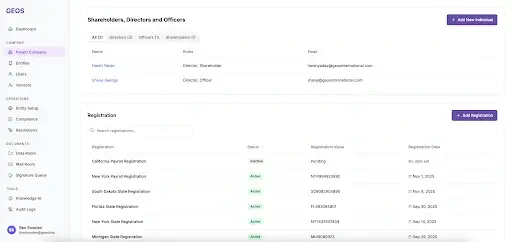
The Canada Business Corporations Act provides that federal corporations must have at least 25% Canadian-resident directors, and at least one resident director where the board has fewer than four members. For a foreign parent with no Canadian resident on the board, that is a real governance issue. It is not a minor detail.
Several provinces, including Ontario, Alberta, British Columbia, and Nova Scotia, allow 100% foreign directors. In practice, that makes provincial incorporation far more usable for foreign-owned subsidiaries.
This is why our clients choose provincial incorporation, often in Ontario. It is simpler. It aligns with the board they actually have. It avoids introducing a resident-director issue that Canada does not need to create for a straightforward foreign-owned setup.
For a practical operating company, that matters more than the federal label.
Myth 2: Federal incorporation gives a nationwide operating shortcut
This is the myth that causes the most confusion in boardrooms.
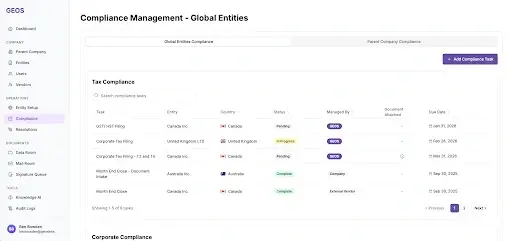
A federal corporation does not give a company a free pass to operate across Canada without more registrations. The business still needs to register in each province or territory where it conducts business.
Corporations Canada explains that a federal corporation must register in each province or territory where it conducts business, and that standard can include having an address, phone number, or selling goods or services there. In practice, hiring employees or establishing a physical presence brings that question into view very quickly.
This is where the “federal means countrywide” assumption breaks down. A federal corporation still ends up dealing with provincial filings as the footprint expands. That applies to extra-provincial registrations, local agents for service in some jurisdictions, and additional annual filings that keep the entity in good standing.
The cost profile also moves more than many companies expect. Ribbon’s fee comparison shows government fees in Ontario at C$0 for initial extra-provincial registration, plus a C$13.80 NUANS search, while British Columbia is C$350 initially and Quebec is C$367. The same source shows annual fees of C$43.39 in British Columbia and C$98 in Quebec, and notes that many provinces require a local Canadian agent or address.
Founders often budget the certificate of incorporation and move on. The hidden work sits in the spread of registrations, agents, annual maintenance, and last-mile tax filings. That is what keeps the lights on from a compliance perspective. Federal incorporation does not remove that work. It simply changes where the first filing sits.
Myth 3: Federal name protection should drive the decision
This concern comes up often, especially with boards that care deeply about brand control.
The federal route is seen as more attractive because it reserves the corporate name more broadly across the country. That point is not fictional. It is also rarely decisive for a foreign-owned technology or services business trying to move quickly.
The more important issue is whether the structure fits the company’s governance reality. If the company does not have Canadian-resident directors available for a federal board requirement, then the name discussion drops down the priority list very quickly. Structure and operability come first.
I also do not see provincial name reservation as a serious long-term weakness. In practical terms, reserving a name provincially later is straightforward. It is not the kind of issue that should dictate the entire setup strategy for a fast-moving scale-up.
I would rather see a company launch on a clean structure than hold up the launch for a name-protection argument that adds little operating value in the near term.
Myth 4: A fast filing means a fast launch
This is where companies get hooked into a false promise.
Incorporation in Canada is genuinely fast
Canada deserves its reputation for speed at the filing stage. Unlike most countries, a foreign parent generally does not need notarized, apostilled, or certified document packs to incorporate. That removes weeks of friction that show up almost everywhere else.
In a global setup context, that is unusual. Canada, the UK, and the US are part of a very small group where a foreign-owned company can move through incorporation quickly. That is why the “few days” timeline can be true here in a narrow sense.
Activation is a separate workstream

The problem starts when that filing timeline gets stretched into a full launch timeline. Incorporation timelines are wrongfully quoted almost every time when they measure only the legal filing and leave out the surrounding work.
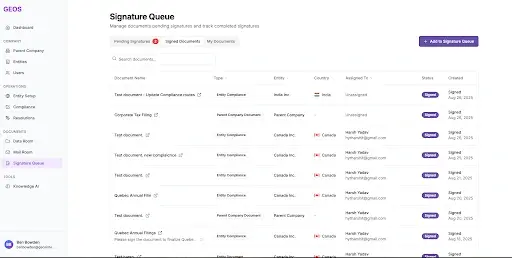
A company can exist on paper while tax registrations, payroll setup, bank onboarding, and internal controls are still open. In Canada, I separate incorporation from activation. Activation means the subsidiary can actually operate in the way the business needs it to operate.
Traditional banking is a good example. In my experience, opening a traditional bank account in Canada can be more difficult than setting up the entity itself. Founders who assume the bank account will simply follow the filing often discover that the banking process becomes its own project.
This is the point that matters to a hyper-growth CEO. The board does not care when the certificate was issued if the entity still cannot support payroll, tax administration, or the commercial activity it was meant to support.
Myth 5: CRA administration is routine for foreign-owned entities
The CRA is one of the main reasons a clean filing does not always translate into a clean launch.
The portal issue is real
The CRA is well set up for Canadians. If someone has a social insurance number and standard domestic access, the online systems are workable. The problem is that this breaks down for foreign-owned entities with no Canadian-resident directors or operators who can access the system directly.
That leaves many foreign companies in a manual process. Directors need to call in. They sit in the phone queue. They wait for an agent. In some cases, the agent is less familiar with the foreign-owned fact pattern because the workflow is designed around domestic users.
This is a good reminder that even in easier jurisdictions, parts of the process are still rooted in manual processes.
The fix is simple, but it needs to be planned
The cleanest solution is to make sure the entity is marked correctly as foreign-owned from the start and to appoint an authorized representative in Canada early. In practice, that is often an accountant or tax representative who already has CRA access.
Once that representative is in place, the process becomes much easier. The company is no longer relying on busy foreign directors to manage routine tax administration through phone calls and fragmented follow-up.
This is a small planning point with outsized impact. When it surfaces late, the problem is usually not Canadian law. It is process.
Myth 6: The only strategic question is federal versus provincial
In many cases, that question comes too early.
Before deciding between federal and provincial, I usually ask a more basic question: why is a Canadian entity needed now? Hiring the first few people, opening a limited commercial presence, and standing up a permanent operating subsidiary are different goals. They should not be treated as the same event.
A global expansion journey has a beginning, middle and end. For early hiring, an Employer of Record can still be a strong option. In Canada, I think the break-even point to move from EOR to an owned entity often comes earlier than in more complex countries. It can be closer to three to six employees, depending on the business model and the level of control the company needs.
Once a company has reached critical mass, owning the entity usually makes more sense. The economics improve. Control over benefits and HR policy improves. Equity planning becomes cleaner. The company also gains the reputational and contractual benefits that come with a true local establishment.
At that point, provincial incorporation is usually the practical fit. If the company is still testing the market, the incorporation debate may simply be premature. I prefer to meet companies where they are and use the right tool for the stage they are actually in.
Myth 7: Procurement solves the problem
This is the final myth I would address.
Companies often frame Canada setup as a simple advisor choice. One path is the cheapest local lawyer or accountant. The other is a Big Four firm under one logo and one umbrella. Neither route automatically fixes the operating problem.
A single-market local provider may be fine for a filing. The issue is what happens after the filing. Many of these providers operate as if they are a black box. Steps arrive piecemeal by email or phone calls. The parent company is left to project manage the process and infer what was not said. That may be tolerable for one entity. It becomes painful very quickly across multiple markets or provinces.
The legacy global model has its own issues. I have been on the client side of Big Four support. The technical depth is there, but the service is often fragmented by region, bloated and stuck in the past. The client still repeats context across teams and ends up paying for that glut.
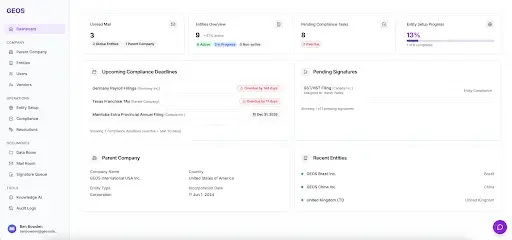
This broader operating problem is one of the reasons we built GEOS the way we did. I prefer a centralized system of record that holds the workflow, the documents, and the compliance calendar in one place, then fortify that with pre-vetted vendors where local support is required. That is a far more stable model for entity management than relying on updates received piecemeal by email.
I have seen the cost of fragmentation clearly. At GEOS, we moved a client with four global subsidiaries away from a Big Four model because the platform gave them better visibility and more transparent pricing. We also helped a company with more than 30 entities untangle years of backlog caused by local firms invoicing subsidiaries directly with no centralized oversight. Canada is easier than most markets, but it can still become one more blind spot if the structure is treated as a filing instead of an operating system.
My practical recommendation
For most foreign-owned technology, services, and e-commerce companies, my default recommendation is provincial incorporation, usually in Ontario, unless there is a specific legal reason to choose otherwise and the board can comfortably satisfy the federal resident-director requirement. That route is cleaner, faster, and more aligned with the ownership structure most foreign parents actually have.
I would also plan the launch as one connected workstream. Incorporation, CRA setup, banking, payroll, and future extra-provincial registrations should be mapped early. If those items are split across separate vendors and separate inboxes, the company ends up playing with a blindfold.
The final point is strategic discipline. If Canada is still an early market test, a lighter structure may be enough for now. If the company has reached critical mass and needs direct contracts, tighter employment control, and a permanent local presence, then it should own the infrastructure properly and keep the structure simple. My bias remains the same as it is in sales and operations: a B-plus plan executed today is more valuable than a theoretically perfect structure that delays the actual launch.
Closing

Federal versus provincial incorporation in Canada is often presented as a technical legal choice. For foreign-owned scale-ups, it is mainly an operating choice.
Provincial incorporation usually fits the governance reality better. Federal incorporation rarely removes the provincial work that comes later. The real leverage comes from making the entity usable and keeping it compliant as the footprint grows.
That is the frame I would use in the boardroom. Start with the business objective. Choose the structure that matches the ownership reality. Then build the tax, banking, and compliance plan early enough that Canada stays as easy as it should be.
Frequently Asked Questions
Can foreign founders use nominee directors to bypass the federal residency rule?
Yes, but it introduces unnecessary governance risk and recurring fees. If your board lacks Canadian residents, avoid the federal route entirely. Provinces like British Columbia, Alberta, and Ontario impose no Canadian residency requirement for directors. Bypassing friction is a better operating strategy than paying to patch it.
How much upfront capital is legally required to fund a Canadian subsidiary?
Zero. Unlike many European jurisdictions that trap your cash, Canadian corporate law imposes no minimum capital requirement at incorporation. This allows scale-ups to deploy capital efficiently toward regional revenue generation rather than parking dead money in an account just to satisfy a local registrar.
If we incorporate in Ontario, can we immediately hire in British Columbia?
Not immediately. You must complete an extra-provincial registration first. While Ontario charges C$0 in government fees for initial registration, British Columbia charges C$350 upfront and C$43.39 annually. This does not include costs to actually execute on the registration and appoint a local agent. Map these registrations early so your launch timeline does not unexpectedly slip.
What is the true ‘time to activation’ for a Canadian provincial subsidiary?
Filing is instant – Ontario processes online incorporations immediately for C$300. But a certificate is not an operational company. Navigating CRA administration without domestic IDs requires manual phone queues, and corporate banking takes weeks. Expect 30 to 60 days before you can actually run payroll.
What legally triggers the need for extra-provincial registration across Canada?
You must register in any territory where you ‘conduct business.’ Corporations Canada defines this broadly: having a local address, a phone number, or actively selling services there. Hiring permanent local employees brings this into view instantly, triggering new compliance workflows and local agent requirements.